2026-07-10
Cron Jobs vs. Agentic AI
Here's the full picture:
Agents are just configuration files. Most commonly YAML, JSON, or Python code. They contain four things:
- Goal— Natural language description of what you want ("backup database daily")
- Tools — List of available functions (shell commands, HTTP calls, file I/O, etc.)
- LLM config — Where and how to reach the LLM
api_key: Your authentication token (e.g.,sk-ant-...)endpoint: The URL (e.g.,https://api.anthropic.com/v1/messages)model: Which model to use (e.g.,claude-sonnet-4-6)- Other params like temperature, max_tokens
- Loop logic — The reasoning → action → observation → feedback cycle
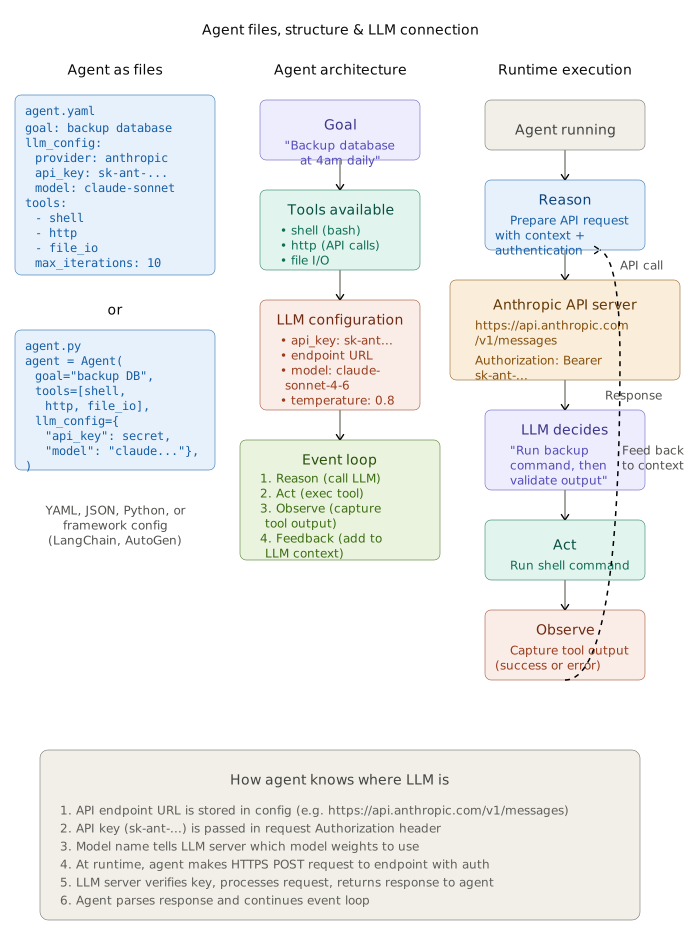
How the agent knows where the LLM is
The api_key and endpoint URL are hardcoded in the config file (or loaded from environment variables for security). At runtime, when the agent needs to reason, it:
- Prepares a request with the current context
- Adds an
Authorization: Bearer sk-ant-...header - Makes an HTTPS POST to the endpoint
- The LLM server verifies the key, processes it, returns a response
- Agent parses the response and continues the loop
That's it. The agent doesn't "learn"—it's stateless. Every time it runs (or starts a new session), it loads the config file fresh and starts over. If you want true learning, you'd need to:
- Save successful agent trajectories to a dataset
- Fine-tune the LLM offline on those trajectories
- Deploy the updated LLM to the agent config
The agent itself is remarkably simple: glorified orchestration layer is fair. But that orchestration—deciding what to do based on observations and reasoning—is exactly what cron jobs can't do.